Hi, I’m Andrew Bradley, and this is Broad Lea Communities.
At Broad Lea Communities, my work is grounded in a simple belief: communities achieve better outcomes when people have the clarity, confidence, and shared direction to act together.
This Theory of Change explains why I organize my work around three interconnected pillars. Each addresses a critical ingredient for transforming vision into implementation.
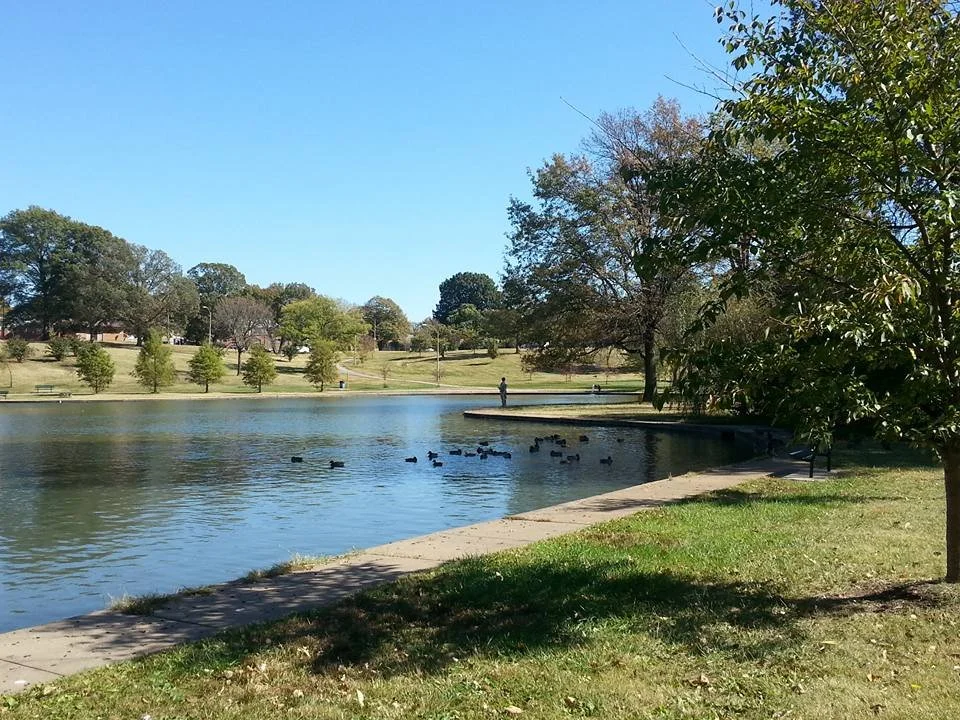
WillMORE PARK, ST. LOUIS, MOMy Journey
Service to one's community has been a defining value for as long as I can remember. Growing up in a Roman Catholic household, I learned that our lives are measured not only by personal achievement, but by our responsibility to others. Over time, that understanding has deepened as I've had the privilege of living and working in remarkably different communities.
My journey has taken me from suburban Orange County, California, to public and private university campuses, to a village in northern Namibia, to the diverse urban neighborhoods of San Francisco and St. Louis, and now back to the close-knit community of Webster Groves, Missouri. Each place has offered its own perspective on belonging, opportunity, and what it means for a community to thrive.
My professional path has been equally varied. It began as an ESL tutor and Peace Corps education volunteer and evolved through nonprofit leadership, social enterprise, real estate and community development finance, affordable housing development, and, most recently, advisory work in real estate, infrastructure, and public-private partnerships (P3s).
Although the settings have changed, a common thread has emerged. Every community possesses extraordinary strengths. Every community also faces complex challenges that no single organization can solve alone. Along the way, I've been shaped by the generosity, resilience, and wisdom of colleagues, neighbors, and friends whose perspectives have continually challenged my own.
Please visit my Facebook and LinkedIn profiles for more details, respectively, on the communities where I have lived and the organizations and teams I have served professionally.
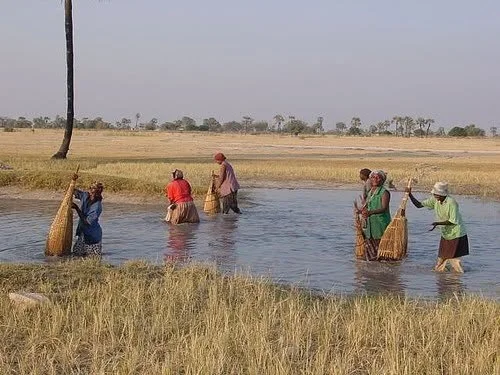
ONASHIKU SHALABAN VILLAGE, NAMIBIA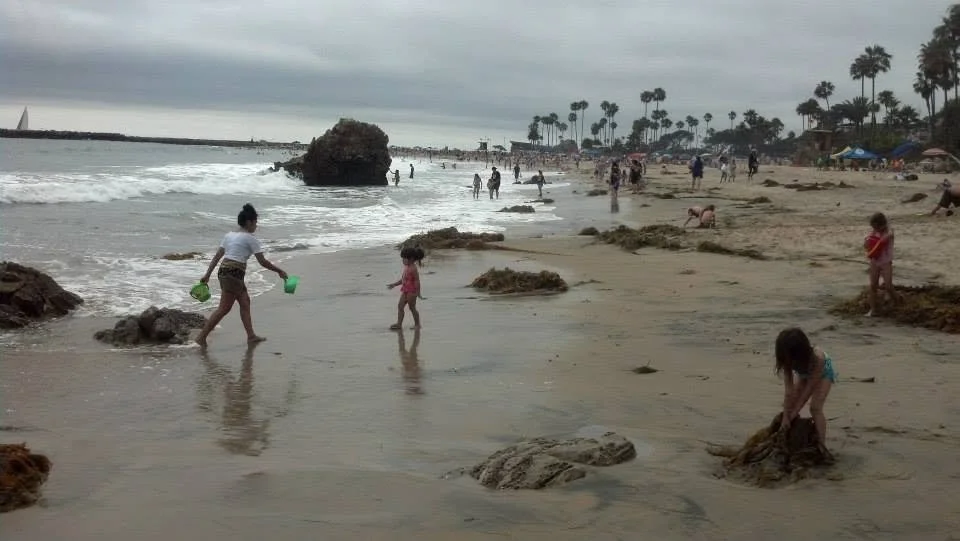
corona del mar state beach, newport beach, caCommunities Where I’ve Lived
Tustin, CA
Los Angeles, CA
Onashiku shaLaban Village, UuKwambi, Owamboland, Namibia
San Francisco, CA
St. Louis, MO
Maplewood, MO
Clayton, MO
Webster Groves, MO
Professional Highlights
Taught over 100 learners in ESL, mathematics, and information sciences in two academic years as a teacher in rural Namibia
Secured or placed over $1 billion in commercial real estate debt and tax credit equity
Hired and promoted a handful of emerging professionals in transactional finance and community development lending roles
Advised over 25 national clients on P3, real estate, and infrastructure projects and initiatives
What I’ve Learned

I've come to believe that the most valuable lessons are often the simplest and most fundamental. They become more profound each time life yields another opportunity to practice them.
These lessons are not novel nor do they represent the culmination of my learning process. They continue to evolve with every project, partnership, and community I have the privilege to serve. If there’s a common thread, it’s this:
Success is less about accumulating answers than about developing habits that help us ask better questions, remain grounded, and keep moving forward with humility.
Trust the Process
Not every path is linear, and not every detour is a mistake. Some of the opportunities that shaped my life arrived through unexpected conversations, failed plans, or moments that initially felt like setbacks. Progress is not always obvious, but it is often occurring beneath the surface by way of a series of pivots and unanticipated opportunities.
Listen, But Do Not Judge
Every person carries a story that cannot be understood from first impressions. The most productive conversations I’ve had - whether in neighborhoods, conference rooms, classrooms, or coffee shops - began not with answers but with curiosity. Listening without immediately evaluating creates space for trust, collaboration, and perspectives that would otherwise remain hidden. We don’t have to agree with every viewpoint to learn something from the person sharing it.
Touch Grass
It’s all too easy to confuse spreadsheets, reports, and strategic plans with reality. The real world exists outside the conference room or the Zoom call. It lives in neighborhoods, parks, storefronts, right-of-ways, construction sites, and conversations with people who experience the outcomes of placemaking and placekeeping decisions. Whenever I find myself overthinking, I’ve learned to get outside, walk the community, and reconnect with the places and people that remind me why the work matters in the first place.
Drink Water
We often celebrate endurance while overlooking sustainability. Clear thinking, sound judgment, and meaningful leadership require taking care of ourselves and the ones dear to us first. Rest, health, perspective, and balance are not merely “self-care” or distractions from good work - they are prerequisites for it. Discernment rarely arrives when we’re depleted.
Choose Wisely
Time, alas, is finite. So are relationships, opportunities, and attention. Every “yes” is also a “no” to something else. I’ve become increasingly intentional about the people I invest in, the projects I pursue, and the problems I choose to help solve. Recognizing that some things deserve your energy while others do not is critical to balanced living.
What I Believe

Communities Already Have the Core Assets They Need
Every community possesses strengths - institutions, leaders, history, culture, land, capital, and relationships. But its greatest asset is its people - their hopes for the future, memories of the past, lived experiences, talents, and aspirations form the foundation upon which every successful community is built.
The challenge may appear on the surface to be the absence of assets, but it is often recognizing them, connecting them with intention, and creating the conditions for them to flourish.
Collaboration Is a Competitive Advantage
The most transformative projects emerge when organizations choose collaboration and partnership over zero-sum competition. P3s succeed because they recognize that no single organization holds all the resources, expertise, or authority required to solve complex challenges. My work spans sectors because the problems communities face do not recognize organizational or sectoral boundaries.
Capital Should Follow Community Value
Financial feasibility matters, and I greatly appreciate a well-tuned proforma. But so does community impact. The strongest projects bring these elements together. Having worked across diverse disciplines where financing and funding decisions influence people and place, I believe capital is most impactful when it aligns financial sustainability with community-directed goals.
Data Should Inform Decisions, Not Replace Judgment
Data reveals patterns, but those patterns must be put into context and presented clearly to inform effective decision-making. Whether evaluating development opportunities, structuring partnerships, or prioritizing investments, I use evidence to present useful frameworks that inform and guide conversations but do not substitute for them.
Relationships Are Infrastructure
Projects may begin with a financing tool or planning process, but they are sustained by trust. Relationships between community members and institutions, public agencies and private investors, universities and neighborhoods, or employers and communities often determine whether an initiative will succeed long before the ribbon cutting. These relationships are a form of infrastructure that requires continuous investment because they endure long after a project is delivered.
Every Community Deserves Thoughtful Strategy
Large cities do not have a monopoly on innovation, and small communities should not have to settle for generic, top-down solutions. Every place has its own history, market realities, governance structure, and aspirations. My work reflects that belief by adapting proven approaches rather than imposing a predetermined prescription.
Implementation Matters
Vision is essential, but execution creates impact. I value practical strategies, clearly defined responsibilities, measurable milestones, strategic options, and partnerships capable of moving from concept to reality. Great ideas only change communities when organizations and people are motivated and resourced to build them.
Communities are not built by any one sector alone - growth happens when public agencies, private investment, philanthropy, anchor institutions, and community leaders move in formation toward a shared vision. My experience has reinforced a set of beliefs that inform every engagement, regardless of geography, scale, or typology.
These beliefs have been shaped through our experiences in the communities we’ve lived in and the professional experiences we’ve mustered. They are less a methodology than a commitment:
To help communities connect people, capital, and purpose in ways that create long-lasting opportunity and prosperity.

How Change Happens
At Broad Lea Communities, my role is to serve as a guide: helping communities ask the right questions, assemble the right partners, identify the right tools, and build the momentum to move from vision to implementation.
I believe meaningful change happens through three interconnected dimensions.
PEOPLE
Communities are built by people, not projects - residents, business owners, public servants, philanthropists, institutional leaders, and investors each hold part of the solution.
PARTNERSHIPS
No single organization can solve today’s complex challenges alone. Addressing them often requires thoughtful collaboration among public, private, nonprofit, and philanthropic partners. My role is to help communities identify who should be at the table, clarify roles, bridge gaps, and foster partnerships capable of accomplishing what no individual organization could achieve alone.
POSSIBILITY
Every community has opportunities waiting to be unlocked. Bringing a vision to life requires identifying the right strategies, aligning partners and resources, and defining the steps from ideas to implementation. But as each step is taken, it is important to balance forward momentum with the flexibility to respond to new opportunities that emerge along the way.
CArondelet park, st. louis, moBLC’s Three-Pillar Approach